
From Asimov to Agent Quotient
By Bruce Wade
In 1942, Isaac Asimov introduced his famous Three Laws of Robotics, establishing principles for human-robot interaction that would influence decades of science fiction and real-world AI development. Today, we need a new framework.
Asimov’s laws focused on preventing harm: robots cannot injure humans, must obey human orders (except when conflicting with the first law), and must protect their own existence (except when conflicting with the first two laws). These were safeguards, not relationship guidelines.
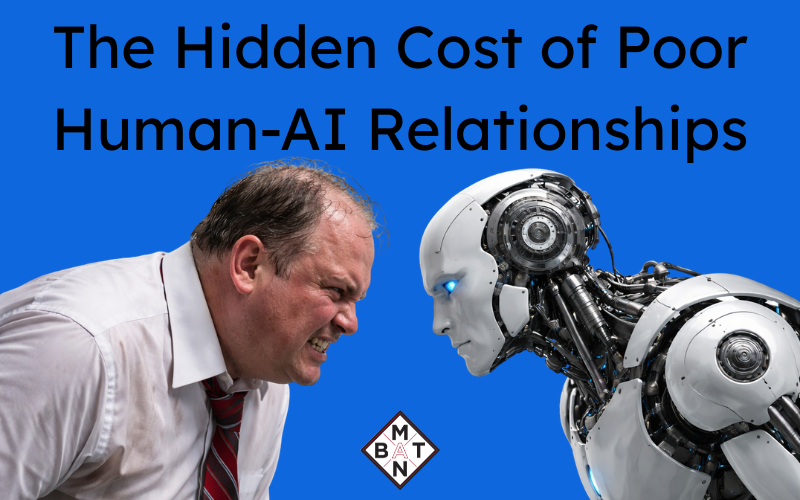
The modern AI landscape requires different thinking. Today’s AI doesn’t threaten us with physical harm; it challenges us with bias, surveillance, job displacement, and loss of agency. More importantly, AI’s value lies not in obedience but in collaboration. We need frameworks that optimise partnership quality, not just prevent catastrophe.
This is why I developed the Agent Quotient framework. Rather than focusing solely on what AI shouldn’t do, AQ concentrates on what high-quality human-AI relationships should achieve: mutual enhancement, effective communication, genuine collaboration, reliable trust, and adaptive flexibility.
Consider how this shifts the conversation. Instead of asking “Is this AI safe?” we ask “Is this human-AI relationship effective?” Instead of imposing rigid rules, we develop adaptive partnerships that evolve with changing conditions.
The question Asimov raised: to what extent should AI prevent humans from harming ourselves? remains relevant. But the more urgent question for business leaders is: to what extent can we leverage human-AI partnerships to unlock unprecedented innovation and competitive advantage?
As I explore in “The AQ Leader,” the organisations answering this question systematically will define the next era of business competition.