
The Four Stages of AQ Maturity Every Executive Should Know
By Bruce Wade
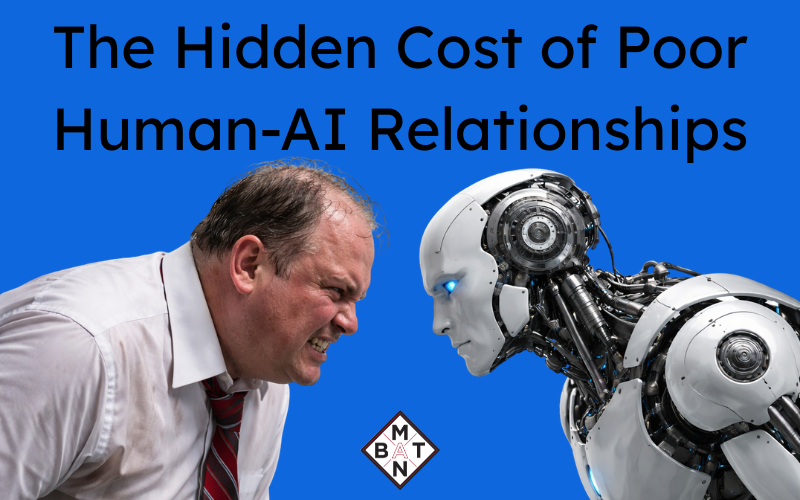
A CEO convinced his AI initiative was a massive success, said. “We’ve deployed AI across twelve departments,” he said proudly. “ROI is tracking at 180%.” Then I asked: “How do your people feel about working with these systems?” The silence was telling.
This is the invisible problem plaguing organisations worldwide. Through my work, I’ve identified four distinct stages of AQ maturity that determine whether your AI investments thrive or merely survive.
Stage 1: AI Resistance (AQ Score 1-3) – Employees actively avoid AI tools, develop workarounds, and revert to manual processes despite having access to automation.
Stage 2: AI Tolerance (AQ Score 4-6) – People use AI because policy requires it, not because they find genuine value. Productivity improvements exist but consistently fall short of projections. The technology provides compliance value but fails to enhance actual decision-making.
Stage 3: AI Collaboration (AQ Score 7-8) – Teams actively engage with AI as genuine collaborative partners. Innovation emerges in how AI gets applied.
Stage 4: AI Enhancement (AQ Score 9-10) – Seamless human-AI integration creates entirely new competitive advantages. These organisations become magnets for AI-savvy talent and receive industry recognition for innovative practices.
Understanding your organisation’s stage isn’t just interesting, it’s essential for strategic planning and investment decisions. As I detail in “The AQ Leader,” AQ maturity matters more than technology sophistication.